Every year, millions of dollars worth of electrical and electronic equipment is damaged or ruined by the effects of water contamination due to rain, flooding, broken water pipes and fire related damage. CRC Electrical Products and the following procedures are effective tools in recovering water-contaminated equipment, significantly reducing damage and many times leading to the complete recovery of flooded equipment
STEP 1: CLEAN THE EQUIPMENT
To remove dirt, mud, oil, sludge and other contaminants deposited by water, follow these directions as closely as possible:
- Remove end bells from electric motors and pumps.
- Remove covers from switch gear and control panels.
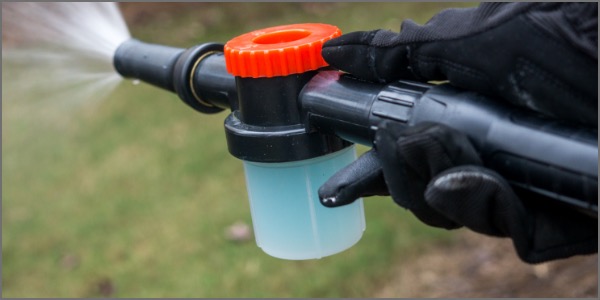
- Flush or spray equipment with generous amounts of clean water. If possible, dip equipment in a tank or drum of clean water, and agitate while submerged.
- Stand motors and pumps on end and allow to drain.
Note: Equipment already damaged by water will not be damaged by the use of clean water to flush away dirt, mud and chemical contaminants. Equipment flushed with clean water responds more quickly to treatment with CRC Products.
STEP 2: APPLY CRC LECTRA-CLEAN® OR CRC LECTRA-CLEAN® II
| To remove oil, grease and sludge contamination not removed by water flushing, dip equipment in a CRC Lectra-Clean® or CRC Lectra-Clean® II, or spray thoroughly. Agitate motors and pumps while submerged. Remove and stand on end. Allow to drain. Spray switch gear and control boxes liberally. Be sure to spray all contaminated areas. Allow to air dry. |
 |
Note: Since CRC Lectra-Clean® is a strong cleaner, it may cause crazing or softening of some plastics. It is recommended that a small area be tested before using on plastic parts.
STEP 3: APPLY CRC 2-26®
| Saturate equipment with liberal amounts of CRC 2-26®, inside and out. When possible, dip equipment in CRC 2-26® . Agitate while submerged. Remove and allow to drain. When spraying large motors or stationary switch gear and control boxes, spray generously. Allow excess to run off. Make sure all accessible areas are contacted with CRC 2-26®. To drive out all moisture, continue spraying CRC 2-26® until run-off is clean and clear. |
 |
Note: CRC 2-26® is amber in color. When dilluted with water, it becomes milky colored. Allow to drain. Adequate drainage is a must. Any procedure which allows for maximum drainage is recommended.
STEP 4: MEASURE RESISTANCE
Take Megger readings after equipment has drained. If readings are not up to minimum resistance levels, repeat application of CRC Lectra-Clean® / CRC Lectra-Clean® II and CRC 2-26®. There is no set rule for determining how soon resistance readings will reach minimum levels. This may take from 20 minutes to 36 hours, and require several applications of CRC Products. Sometimes after a motor has been repeatedly treated, it still won't respond. However, after two or three days, it may reach minimum levels after complete penetration by the CRC 2-26®. Minimum resistance levels have been set in the IEEE RECOMMENDED PRACTICE FOR TESTING INSULATION RESISTANCE OF ROTATING MACHINERY STD: 43-1974 reaffirmed 1984. It reads as follows:
- Rm=kV+1
Where Rm = recommended insulation resistance in megaohms at 40 degrees Celsius of the entire machine winding
kV = rated machine terminal to terminal potential in rms kilo volts
Minimum resistance is then 1000 ohms / volt + 1 megohm
STEP 5: APPLY A CRC PRECISION CLEANER
| When minimum levels have been reached, spray low voltage contacts with a CRC Precision Cleaner (PF™ Precision Cleaner, CO™ Contact Cleaner, QD™ Contact Cleaner, or HF™ Contact Cleaner) to remove any dirt particles before energizing. Contacts and coils treated with CRC 2-26® may require additional applications of precision cleaner to remove the protective film. |
STEP 6: ENERGIZE
DO NOT ENERGIZE UNTIL MINIMUM RESISTANCE LEVELS ARE OBTAINED. When Megger readings indicate minimum resistance levels have been reached, energize motors and pumps under "no-load" conditions. Allow to run for a period of time to continue drying under normal conditions. When Megger readings return to normal, motors and pumps can be used in normal loaded manner. |