
 Canada EN
 Mexico ES

Table of Contents:
Why Clean Your Engine Bay? | Step-By-Step Process | Conclusion
There’s nothing better than looking out in your driveway and seeing your car clean, waxed and ready for an afternoon drive. A well-maintained car looks great out on the road, providing drivers an extra sense of pride in their vehicle. Some would argue they feel like their car even drives better after it’s been detailed. But it’s important to remember that keeping it beautiful under the hood is just as important as a shiny exterior.
Even though the engine bay isn't directly exposed to the elements, dust and debris can creep in from openings around the hood, through the vehicle's front end as well as from underneath. Learning how to clean an engine might sound intimidating, but it can be a simple and satisfying afternoon project that will pay dividends in the long run.
Why Clean Your Engine Bay?
Improved Performance and Longevity
- Heat dissipation: Dirt, oil and grime act as insulators, trapping heat. A clean engine bay allows for better airflow and heat dissipation, helping the engine to run cooler and extend the lifespan of engine components.
- Efficient combustion: With clean air intake and properly functioning components, the engine can achieve better combustion efficiency, leading to improved fuel economy.
- Less friction and wear: Dirt and grime can cause friction and wear on moving parts. Keeping the engine bay clean reduces this friction, allowing components to move smoothly and efficiently.
- Reduced corrosion: Dirt and moisture can cause electrical connections to corrode, leading to poor connectivity and performance issues. A clean engine bay minimizes the risk of corrosion.
- Preventive maintenance: Clean components are less likely to suffer from premature wear and tear, extending their lifespan and maintaining their optimal performance.
Ease of Maintenance
- Identifying leaks and issues: A clean engine bay makes it easier to spot potential problems like oil or coolant leaks, worn-out belts or corroded components. Early detection allows for prompt repairs, preventing small issues from becoming major problems.
- Simplified repairs: A clean engine bay is easier to work on, reducing the time it takes to perform a repair and potentially reducing labor costs.
Enhanced Resale Value
- Aesthetic appeal: A well-maintained engine bay can significantly enhance the resale value of your car. It signals to potential buyers that the vehicle has been well cared for.
Safety
- Fire prevention: Leaves, paper and other debris can accumulate in the engine bay along with oil and grease buildup on component surfaces. All these items can be very flammable and can easily catch fire from hot engine components or electrical sparks. When you clean your engine bay, these substances are removed, reducing the risk of them igniting.
Step-By-Step Process to Clean an Engine Bay
1. Preparation

- Materials Needed:
- Degreaser for Cars: CRC makes two products that are specifically designed for this job – the original CRC® Engine Degreaser and a low VOC formula.
- Plastic bags
- Electrical tape
- Soft brushes and sponges
- Microfiber towels
- Water hose or pressure washer (with caution)
- Protective gloves and goggles
- Air compressor or leaf blower
- Cool Down the Engine: If the car was recently running, flip the hood up and wait until the engine is cool to the touch. Hot engine components can not only burn you, but they can also be damaged by rapid contraction if sprayed with cool water.
- Safety First: As with any automotive maintenance, it’s important to wear protective goggles and gloves to safeguard your eyes and hands from hazardous materials, sharp objects and potential chemical spills. Long sleeve shirts and pants are also recommended.
2. Protect Sensitive Components
- Cover electrical parts: Use plastic bags and electrical tape to cover and seal sensitive parts such as the battery, alternator, fuse panel and any exposed wiring, sensors and modules. (Disconnecting the battery is an optional step for additional safety).
- Seal air intake and filters: Ensure these areas are well-protected to prevent water from entering by sealing them off with plastic bags and electrical tape.
3. Initial Cleaning
- Remove loose debris: Use a leaf blower or air compressor to blow away the majority of loose dirt and debris from the engine bay.
- Dry brush: For the hard-to-reach places and any areas not cleared by a leaf blower or air compressor, use a soft brush to loosen dirt and grime from the surface.
4. Apply Degreaser
- Spray evenly: Apply CRC® Engine Degreaser generously on the engine bay, focusing on greasy and dirty areas.
- Let It sit: Allow the degreaser to sit for 10-15 minutes to break down the grime.
5. Scrub and Clean

- Agitate the grease: Use a soft brush to scrub the areas covered with degreaser. Be thorough but gentle to avoid damaging components.
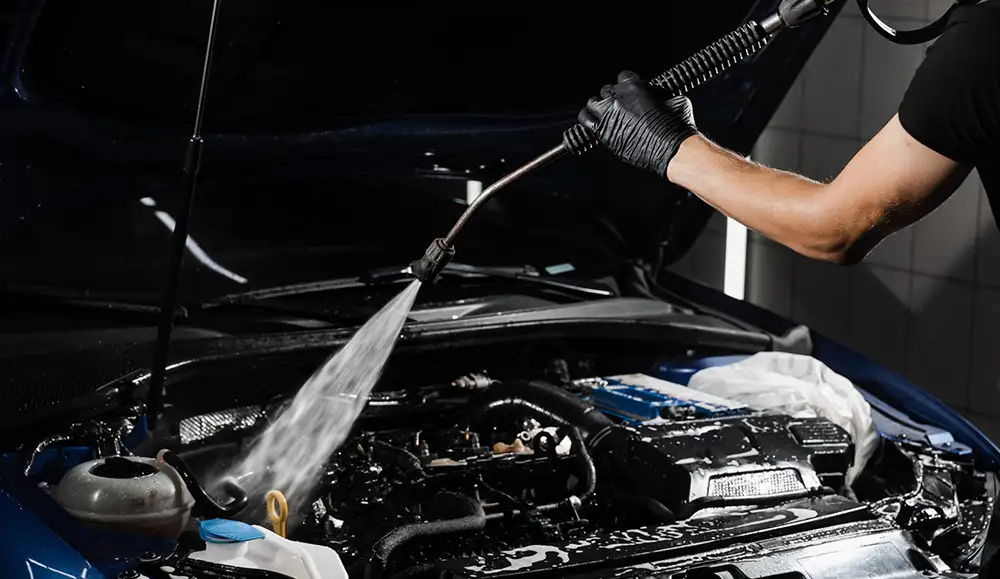
- Rinse carefully: Use a hose with a gentle spray or a pressure washer on a low setting to rinse off the degreaser. Avoid high pressure to prevent water from penetrating or damaging sensitive areas.
6. Drying
- Remove covers: Carefully remove the plastic bags, foil and tape from protected components.
- Dry excess water: Use microfiber towels to dry the engine bay as much as possible. For thorough drying, you can use an air compressor or leaf blower to remove any excess water from hard-to-reach areas.
- Let it air dry: Leave the hood open for a while to allow the engine bay to air dry completely.
7. Finishing Touches
- Inspection: Check for any missed spots and re-clean if necessary.
- Detailing: Use a plastic or rubber conditioner to shine and protect plastic and rubber components against future dirt and grime.
- Reconnect battery: If you disconnected the battery during your preparation, reconnect it after ensuring everything is dry.
8. Maintenance
- Regular cleaning: Incorporate engine bay cleaning into your regular car maintenance routine to keep it in top condition.
- Checkups: Regularly inspect the engine bay for any signs of leaks, corrosion, or other issues. If you perform your own oil changes, that’s a great time to look over the engine bay for any signs of dirt and grime buildup.
Conclusions on How to Clean an Engine Bay
A clean engine bay is not just about aesthetics; it offers tangible benefits that enhance the performance, safety and resale value of your vehicle. By following the steps outlined above, you can maintain a clean engine bay and save time and money on repairs and maintenance for years to come.