
 Canada EN
 Mexico ES
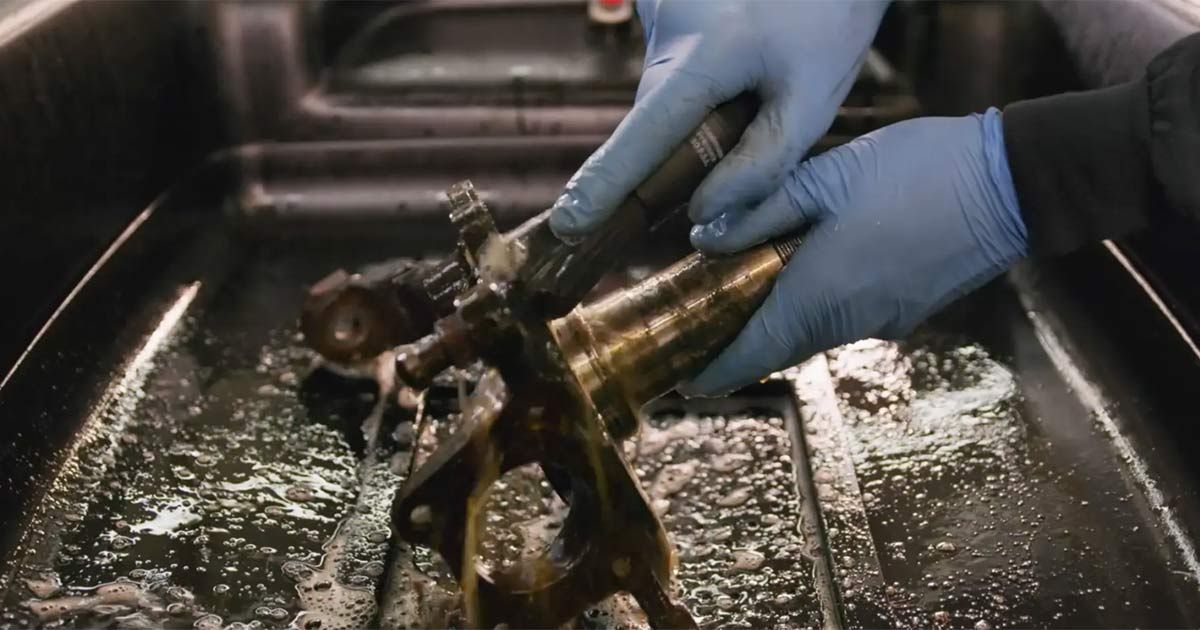
There is a lot of talk about green, earth-friendly or environmentally responsible solutions for a shop. Most shop owners think these products will be more expensive and not work as well, and the only benefit will be that smug feeling of helping the planet. But, some parts washing systems make more sense both financially and for safety reasons, by eliminating harmful solvents. Being green or kind to the planet is a bonus.
ALTERNATIVES
Water-based or aqueous parts cleaners have been around for more than 20 years. In the beginning, these units were designed for industrial applications and engine builders. Today, aqueous parts cleaning solutions are available in smaller packages that are optimal for repair shops. Instead of dissolving grease and dirt with solvents, these parts washers use water-based cleaning solutions with detergents to break up and emulsify contaminants. The main advantage of these water-based parts washers is the minimization of harmful chemicals in the shop environment. But, aqueous cleaning solutions need periodic replacement, and the resulting solution is considered hazardous.
BIOREMEDIATION
The next level of aqueous-based parts washers employs bioremediation technology. The science of bioremediation uses microbes (microorganisms) combined with a water-based degreasing solution to break down carbon-based contaminants like grease and oil and converts them into a harmless byproduct of carbon dioxide and water. (In layman’s terms, bearing grease and oil sludge are food for the microbes.) This proven technology has been used to assist in the cleanup of wastewater treatment ponds and lagoons in petroleum refineries and industrial manufacturing facilities all around the world.
Bioremediation parts washers have a setup similar to other parts washers. An electric pump moves the cleaning solution from a storage tank to a basin where parts are cleaned. The basin collects the cleaning solution and it flows back into the storage tank. A unique feature in some proprietary systems is the filter or mat which introduces the microbes into the cleaning fluid. The mat contains microbes within its fibers and can trap particulates as small as 50 microns in size to keep the tank free of debris. The tank has a heater to maintain optimal conditions for the microbes to reproduce and stay healthy to continue the bioremediation process.
If you maintain your bioremediation parts washer by replacing the mat once a month under normal usage conditions, you will never need to change or haul away the cleaning fluid. This is one of the biggest advantages of this type of system. It eliminates the expense of hazardous liquid waste removal and Cradle to Grave liability. It is self-cleaning, so it won’t require the ongoing purchase of solvent cleaners. Another obvious benefit is the safety factor for the user. You get high-performance cleaning that is non-hazardous, non-flammable, and yes, you are helping the planet too.
 Author: Andrew Markel, Director of Content, Babcox Media


 Author: Andrew Markel, Director of Content, Babcox Media
July 3, 2018