
 Canada EN
 Mexico ES

Table of Contents:
Why Lubricating a Garage Door Matters | Recommended Products | Step-by-Step Guide | Best Practices | Safety Recommendations | Final Thoughts
A noisy or sluggish garage door can be more than just an annoyance. It can signal wear and tear that could lead to costly repairs if not repaired. Regular garage door lubrication is one of the simplest and most effective ways to extend the life of your door and ensure it operates smoothly. In this guide, we'll walk you through how to lubricate a garage door properly, recommend the best garage door lubricant products, and share some tips to keep your maintenance routine easy and effective.
Why Lubricating a Garage Door Matters
Lubricating a garage door is an important part of routine maintenance that often goes overlooked. Every time you open or close your garage door, dozens of components, such as rollers, hinges, tracks, springs and bearings work together under significant mechanical stress. Over time, this constant movement generates friction, which can lead to wear and tear if not properly managed. Applying a high-quality garage door lubricant helps reduce this friction, allowing parts to glide smoothly and operate efficiently.
In addition to improving performance, lubrication acts as a protective barrier against moisture and environmental contaminants. This is especially important in regions with high humidity, rain or snow, where metal components are prone to rust and corrosion. Rust not only weakens the structural integrity of parts like springs and tracks but can also cause the door to seize or jam unexpectedly.
Noise reduction is another major benefit. A well-lubricated garage door operates quietly, reducing the screeching, grinding, or rattling sounds that often accompany neglected systems. This is particularly valuable in homes with attached garages, where loud operation can disturb daily life or sleep.
Neglecting garage door lubrication can result in premature failure of key components. Worn-out rollers may crack or seize, hinges can become stiff and misaligned, and springs may snap under tension. Any of these problems can lead to costly repairs or even dangerous malfunctions. In extreme cases, a poorly maintained garage door can even pose safety risks.
Recommended Products: Best Lubrication for Garage Doors
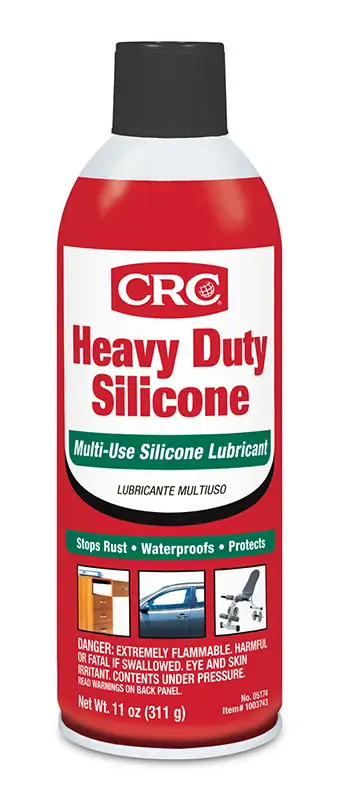
Selecting the appropriate lubricant for your garage door is essential to ensure smooth operation and long-term reliability. CRC® Heavy Duty Silicone Lubricant is a great choice for keeping garage doors operating smoothly and quietly. Its fast-drying, non-staining formula reduces friction on metal tracks, rollers, and hinges, helping prevent wear and tear while resisting moisture.
By investing in the right lubricant, you not only improve the performance of your garage door but also avoid unnecessary repairs and replacements down the line. It's a simple yet impactful step in maintaining one of the most frequently used entry points in your home.
How to Lubricate a Garage Door: Step-by-Step
Follow the steps below to ensure thorough and safe garage door lubrication.
Pro Tip: Hold a piece of cardboard behind where you intend to spray to avoid getting lubricant on any other surfaces.
1. Turn Off Power and Secure the Door
- Disconnect the automatic opener.
- Ensure the door is in the down position to prevent sudden movement.
2. Clean the Tracks
- Use a damp cloth to wipe away dirt and debris.
- Do not lubricate the tracks. This can cause the rollers to slip.
3. Lubricate Garage Door Rollers
- Apply lubricant to the roller bearings.
- Avoid spraying the wheels themselves to prevent slippage.
4. Lubricate Hinges
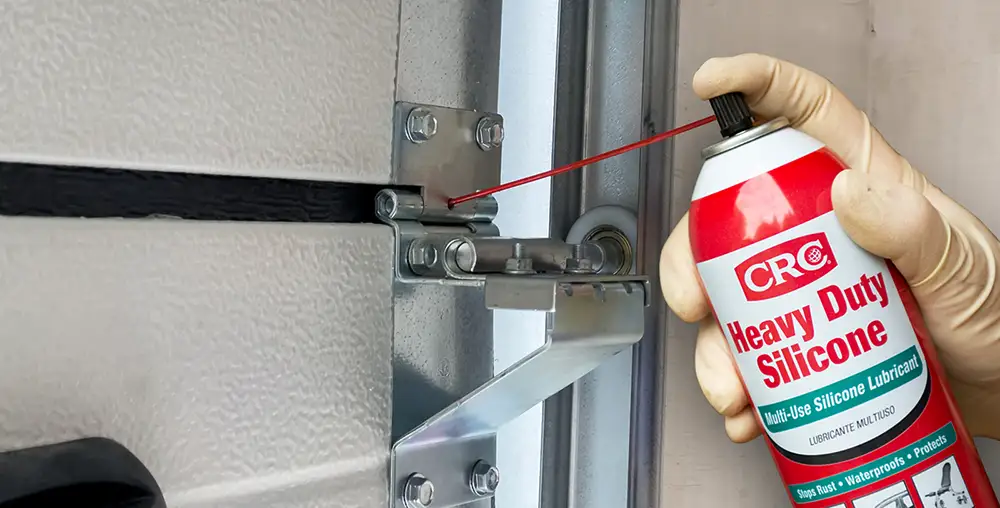
- Spray lubricant on the pivot points of each hinge.
- Open and close the door manually to distribute the lubricant.
5. Lubricate Springs
- Spray lubricant to coat torsion or extension springs.
- Apply a light spray and let it soak in, don't overdo it.
6. Lubricate the Chain or Screw Drive
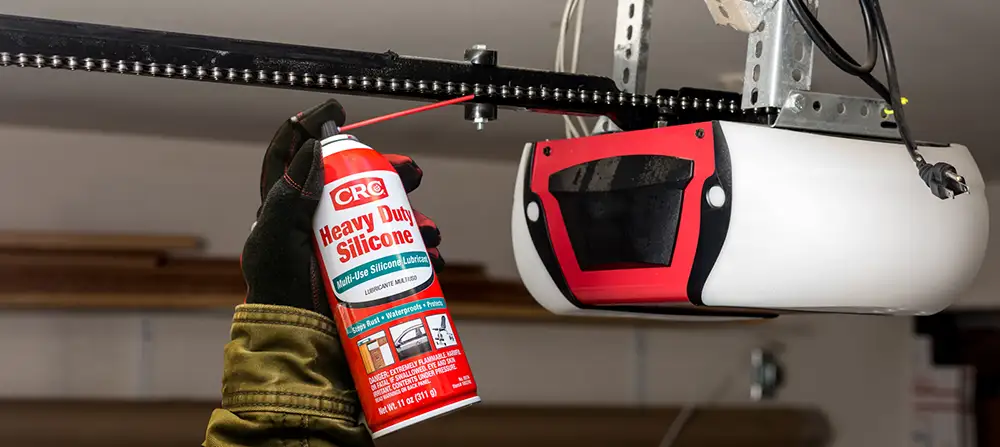
- If your opener uses a chain or screw drive, apply garage door lubricant along the drive.
7. Lubricate Bearings and Pulleys
- Spray lubricant on garage door components like bearings and pulleys to reduce friction and noise.
8. Lubricate Garage Roller Door Tracks (if applicable)
- For roller-style doors, lubricate the moving joints and roller bearings, but avoid the track itself.
Best Practices for Lubricating a Garage Door
- Frequency: Lubricate garage door components every 6 months or more often in harsh climates.
- Quantity: Use a light touch. Applying excess lubricant during recommended maintenance intervals can attract dust and grime. A light coating works best.
- Motion Test: After lubricating a garage door, open and close it manually to ensure smooth operation.
Safety Recommendations
- Wear gloves and safety glasses to protect against drips and splashes.
- Do not use flammable lubricants near electrical components.
- Keep children and pets away during maintenance.
- Use a sturdy ladder if you need to reach high components like springs or tracks.
Final Thoughts: Best Lubrication for Garage Doors
Lubricating a garage door is a quick, inexpensive task that pays off in quieter operation, longer lifespan, and fewer repairs. Whether you're lubricating garage door rollers, hinges, or springs, using the best garage door lubricant ensures optimal performance. Make garage door lubrication part of your seasonal home maintenance routine, and your door will thank you with years of reliable service.