
 Canada EN
 Mexico ES

Table of Contents:
1. Tires | 2. Battery | 3. Fluids | 4. Brakes | 5. Lights and Wipers | 6. Windshield | 7. Belts and Hoses | 8. Heating System | 9. Winter Emergency Kit | 10. Four-Wheel Drive or All-Wheel Drive | 11. Gas Tank | Bonus Winter Driving Tips | Final Thoughts
Winter driving conditions can be challenging, even for the most experienced drivers. Ice, snow, freezing temperatures, and low visibility all contribute to increased risks on the road. Getting your vehicle ready for winter is crucial for staying safe and ensuring it runs reliably all season long. This guide will walk you through the steps to winterize your car, from checking important parts to packing must-have supplies.
1. Check Your Tires
Maintaining traction on slippery road surfaces can be difficult in winter weather. Proper tires are one of the most critical aspects of safe winter driving.

- Winter Tires vs. All-Season Tires: Winter tires are specifically designed for cold weather conditions. Their rubber compounds stay softer and more flexible at low temperatures, offering better grip on snow and ice than all-season tires. Consider switching to winter tires if you live in an area with heavy snow or frequent icy roads.
- Tread Depth: Tread depth is crucial for traction on slippery surfaces. Check your tire treads to ensure they’re at least 6/32 of an inch. If they’re worn down with winter approaching, it’s time to replace them. You can use the “penny test” by inserting a penny into the tread groove; if Lincoln’s head is visible, your tread depth is too low.
- Tire Pressure: Cold temperatures can reduce tire pressure, affecting traction and fuel efficiency. Check your tire pressure regularly (once a month) and maintain the manufacturer-recommended PSI, which is often displayed inside the driver’s side door frame.
2. Inspect and Maintain Your Battery
The last thing you want to deal with is a dead battery on a cold morning. A well-maintained battery is essential in winter, as cold temperatures can reduce its efficiency.
- Battery Age and Health: If your battery is over three years old, it may struggle to hold a charge in cold weather. Have a professional test its voltage and condition. If it shows signs of wear or reduced charge, consider replacing it.
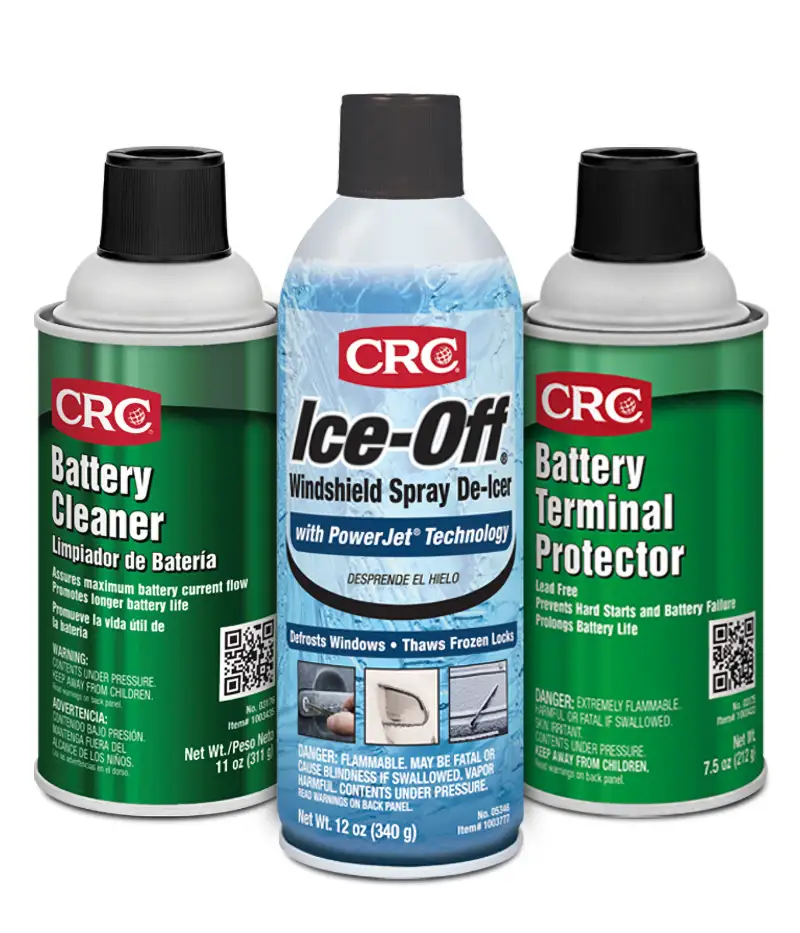
- Clean Battery Terminals: Corrosion around battery terminals can interfere with the battery’s connection. Clean off any rust or corrosion using a wire brush, and ensure the cables are tightly secured. CRC® Battery Cleaner is an excellent choice to help remove corrosion quickly to restore battery output and promote longer battery life. Then follow up with CRC® Battery Terminal Protector to help prevent future corrosion.
- Avoid Frequent Short Trips: Short trips don’t give your battery enough time to recharge. If possible, take longer drives periodically to allow the alternator to recharge the battery fully.
3. Replace or Top Off Fluids
Fluids are the lifeblood of your vehicle, and each serves a specific purpose to keep your car running smoothly in winter.

- Antifreeze (Coolant): Antifreeze prevents your engine from freezing in cold temperatures. Check your coolant level and ensure it’s topped off with a 50/50 mix of antifreeze and water for maximum protection.
- Windshield Washer Fluid: Use a winter-rated windshield washer fluid that won’t freeze in sub-zero temperatures. Keep an extra bottle in your vehicle to ensure you never run out on the road.
- Oil: Cold temperatures can cause oil to thicken, affecting its ability to lubricate the engine. If your vehicle requires oil changes in winter, consider using a winter-grade oil with a lower viscosity rating.
4. Inspect Your Brakes
Your braking system is critical at any time of year, but it is especially important during winter driving. Road salt and harsh conditions can wreak havoc on your brakes.
- Brake Pads and Rotors: Worn brakes can significantly increase stopping distances. Have your brake pads, rotors, and calipers inspected to ensure they’re in good condition prior to the start of winter.
- Brake Fluid: Check your brake fluid level and top it off if necessary. If the fluid is dark, it may be contaminated, in which case, a brake fluid flush may be needed.
5. Ensure Lights and Wipers Are Functional
Visibility can be severely compromised by winter weather. It’s a good idea to check that all lights and wipers are in excellent condition to ensure safe driving.
- Headlights, Taillights and Turn Signals: Test all exterior lights to confirm they’re working. Replace any burned-out bulbs and consider upgrading to brighter, winter-rated bulbs for better visibility.
- Windshield Wipers: Replace your windshield wipers with winter blades, which are specially designed to handle snow and ice. Winter wiper blades have a rubber coating that prevents ice from building up on the blade.
- Defrost System: Check that your front and rear defrosters are working. These systems are essential for keeping your windows clear of frost and fog.
6. Prepare to Clear Your Windshield on Cold Mornings
As temperatures drop, frosted windshields become a daily challenge for many drivers. Clearing your windshield efficiently and safely on cold mornings requires a few preparatory steps.

- Ice Scraper & Snow Brush: Keep a sturdy ice scraper and snow brush in your car. These tools are specifically designed to remove ice and snow without scratching the glass.
- De-icing Spray: An effective de-icing spray can simplify clearing your windshield. CRC® Ice-Off® Windshield Spray De-Icer melts ice, snow, and frost on contact. It’s harmless to the vehicle finish, thaws frozen locks and is effective to sub-zero temperatures.
- Use a Windshield Cover: A windshield cover is an easy way to prevent frost buildup in the first place. Place the cover on your windshield the night before to save time and effort in the morning. Some covers attach with magnets or hooks, making them easy to apply and remove.
- Treat Your Windshield Wipers: Lift your windshield wipers so they don’t freeze to the glass. You can also cover them with old socks to protect them from ice buildup.
- Avoid Common Mistakes
- Don’t Pour Hot Water: Pouring hot water on a cold windshield can cause the glass to crack.
- Don’t Use Metal Scrapers: Only use tools specifically designed for glass, as metal or sharp tools can scratch and weaken the windshield over time.
7. Inspect Belts and Hoses
Cold temperatures can cause belts and hoses to become brittle, leading to potential engine issues.
- Visual Inspection: Look for any signs of cracks, fraying, or wear on the belts and hoses. Pay attention to areas near the pulleys where belts are most likely to wear out.
- Coolant Hoses: Ensure that the coolant hoses are securely attached and free from leaks, as they play a vital role in regulating your engine’s temperature in winter.
8. Check Your Heating System
Your heating system does more than keep you warm; it also plays a role in defrosting your windshield.
- Heater Core: If your heater isn’t working efficiently, it could be due to a clogged heater core. A professional inspection can determine if cleaning or replacing the heater core is necessary.
- Cabin Air Filter: A clogged cabin air filter can reduce the airflow from your heater, making it harder to warm the interior. Replace it if it’s dirty or hasn’t been changed in over a year.
9. Prepare a Winter Emergency Kit
Having an emergency kit in your vehicle can be a lifesaver if you get stranded in a winter storm.
- Essential Supplies: Include items like a first-aid kit, flashlight, extra batteries, blankets, gloves, hats and a basic toolset.
- Traction Aids: Pack sand or cat litter for traction, a small shovel, and tire chains if you live in an area with heavy snow accumulation where chains are necessary.
- Food and Water: Non-perishable snacks (like energy bars) and bottled water are essential if you’re stuck for an extended period.
- Portable Battery Charger: A portable battery charger or jump starter can be crucial to get you going if your battery fails in cold conditions.
- Portable Phone Charger: A fully charged portable charger can keep your phone functional in case of an emergency.
10. Test Your Four-Wheel Drive or All-Wheel Drive (If equipped)
If your vehicle has four-wheel drive or all-wheel drive, it’s a good idea to test it out before winter hits.
- Engage the System: Test the system in a safe area to ensure it engages smoothly. Refer to your owner’s manual for the correct procedure.
- Transmission Fluid: Check the transmission fluid level, as low fluid can affect the performance of four-wheel drive systems. Top off or replace as necessary.
11. Keep Your Gas Tank Half Full
Keeping your gas tank at least half full can prevent fuel lines from freezing and ensure you have enough fuel to run the heater in an emergency.
- Preventing Condensation: Cold weather can cause condensation to form in a near-empty tank, leading to frozen fuel lines. Keeping your tank filled halfway or more minimizes this risk.
- Longer Warm-Ups: Winter driving often requires a longer idle time to warm up the engine, so having extra fuel in your tank can be helpful.
Bonus Safety Winter Driving Tips
- Slow Down: Reduce your speed to maintain control on icy roads.
- Increase Following Distance: Give yourself more space to brake, as icy surfaces can double or even triple your stopping distance.
- Know How to Handle Skids: If your car begins to skid, steer in the direction you want the front wheels to go. Avoid slamming the brakes; instead, gently ease off the gas pedal.
Final Thoughts on Winter Driving Tips
Preparing your vehicle for winter driving can take time, but the effort is well worth it. By performing these essential maintenance tasks and stocking up on supplies, you’re enhancing your safety and minimizing the risk of breakdowns during the cold months. Stay proactive about winter vehicle care, and you’ll be better equipped to handle whatever conditions winter throws your way.